ATEasy supports many programming language features that are supported by .NET. The following lists such features:
Inheritance of classes - you can create classes A, B, C where B derives from A and C derives from B; that is, class A definitions will be included in class B and class B definitions will be in class A.
Multiple constructors - the class can have multiple constructors that can vary in the number of parameters as well as their types. Through parameters, you can initialize values as you create a class object.
Overloading properties and methods - as in constructors, you can have overloaded properties and methods; that is you can more than one same name property or method, that are different in the number of parameters and types. This is a convenient programming tool that you do not have to invent names of such properties and methods.
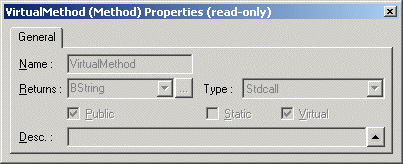
Virtual members - as in the examples in the Inheritance above, derivation in class A, class B, and class C, each class can have a virtual method or property. An object (pointer) or a base class object pointer can refer to each virtual member without specifying its class - conveniently refer to each class virtual members.
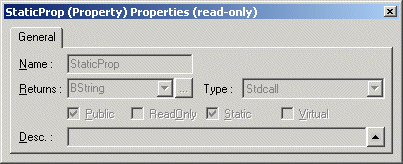
Static members - the static members - either property or method - are those cam refer to not only by class object but also the class name itself. That is, they are global members that exist at all time.
In order to find out if a property or a method is virtual or static - check its property via displaying the property window: