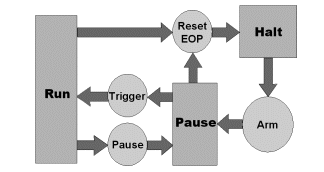
A GT5150 DIO domain operates under three basic operational states: Halt, Pause and Run.
The figure below is a block diagram showing the relationship of these operational states and events.
The DIO board goes into a Halt state following a Reset signal or Halt command. All external events and external control inputs are ignored following a Halt command. Following a Reset, all channel groups are set to Input mode the Program Counter is set to zero, the clock source is set to internal, the clock frequency is set to 10MHz, and the strobe delay is set to 10 seconds. Loading a DIO file will also cause the DIO to Reset and enter a Halt state.
The DIO board enters the Pause state from either the Halt or Run state. If the DIO receives a software ARM command, it will enter the Pause state, ready for a trigger to send it into the Run state. If it is already in the Run state, the DIO will enter the Pause state when the sequencer detects a Pause event. Pause event sources are software or API calls that communicate over the PC bus; Sequencer Pause command; External Pause line is active low; or if the Pause Mask and Pause Events as set in the Trigger section match the states of the corresponding External Event Input lines.
Run state is the natural operating mode. Data is output from memory and re-clocked or the input is latched and stored.
In the Run state, the program counter holds the address of current I/O data and the address of the command to be decoded and executed by the sequencer.
While executing a command, data is exchanged with memory in the preset direction. The Sequencer increments the Program Counter by one unless the command changes the value of the program counter (for example, the Jump command) or the state of the machine is changed (for example, the Pause command).