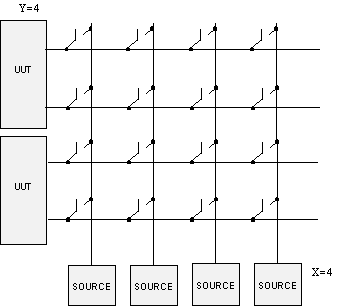
The Switch Matrix Topology connects multiple inputs to multiple outputs. With this configuration, multiple instruments are often connected to multiple points on a UUT. Though the switch matrix topology is the most complex, it certainly is the most versatile. The figure below illustrates the switch matrix topology in simple terms.
The Switch Matrix topology provides the most flexible switching method. However, the following issues must be addressed when using a switch matrix:
Stubs (unused relays) may generate electrical noise if the frequency is above 10 MHz. If you are using a switch matrix to switch high-frequency signals, use the "cleaner" switch paths with shorter stubs. For example, the bottom-left switch shown in the figure below is the "cleanest" path since it has the shortest stubs. The top-right switch in the same figure is the "noisiest" path as it has the longest stubs.
The flexibility provided by the switch matrix means that any point could be connected to any other point. Extreme care should be taken when developing the control software to prevent shorts between low-impedance sources (such as power supplies). A typical method to prevent such shorts is to use a resistor in series between the power supplies and the switch matrix if these signals are for measurement purposes only.
Switch Matrix Topology
Marvin Test Solutions' GX6616 is a true switch matrix that can be used when the switch matrix topology is selected. This product has 6 groups of 2x16 and offer multiple configurations from 2x96 to 6x1 (any of the 6 points may be connected to any of the 16 points).