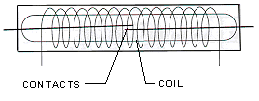
A dry reed relay also operates by energizing a coil. But with this relay type, the coil is wound around the switch so that the induced magnetic field closes the switch. The figure below illustrates a simplified representation of a typical reed relay.
Reed Relay
The switch is made from two thin, flat strips of ferromagnetic material (called reeds) with contacts on the overlapping ends. Leads are connected to the outside ends of the reeds and the entire assembly is sealed in a hermetic glass tube. The tube holds the leads in place. See figure below:
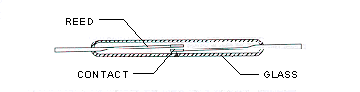
Dry Reed Switch
Most relays are manufactured normally-opened. Some however are produced normally-closed. Normally-closed switches are made in one of two ways. The first method is to make the switch so that the contacts are touching each other. The second method uses a small permanent magnet to hold normally-open contacts together. The field from the coil opposes the field of the magnet, allowing the contacts to open.
In an attempt to lower the characteristic capacitance and leakage currents of the reed relays, an electrostatic shield is sometimes added between the switches and the coil. This shield is typically metal foil that is grounded to a low impedance point in the circuit. Common connection points (low impedance) are signal low and guard. In addition, an electromagnetic shield can also be added around the outside of the coil. This special shield keeps the field generated by the energized coil from interfering with the other components.